
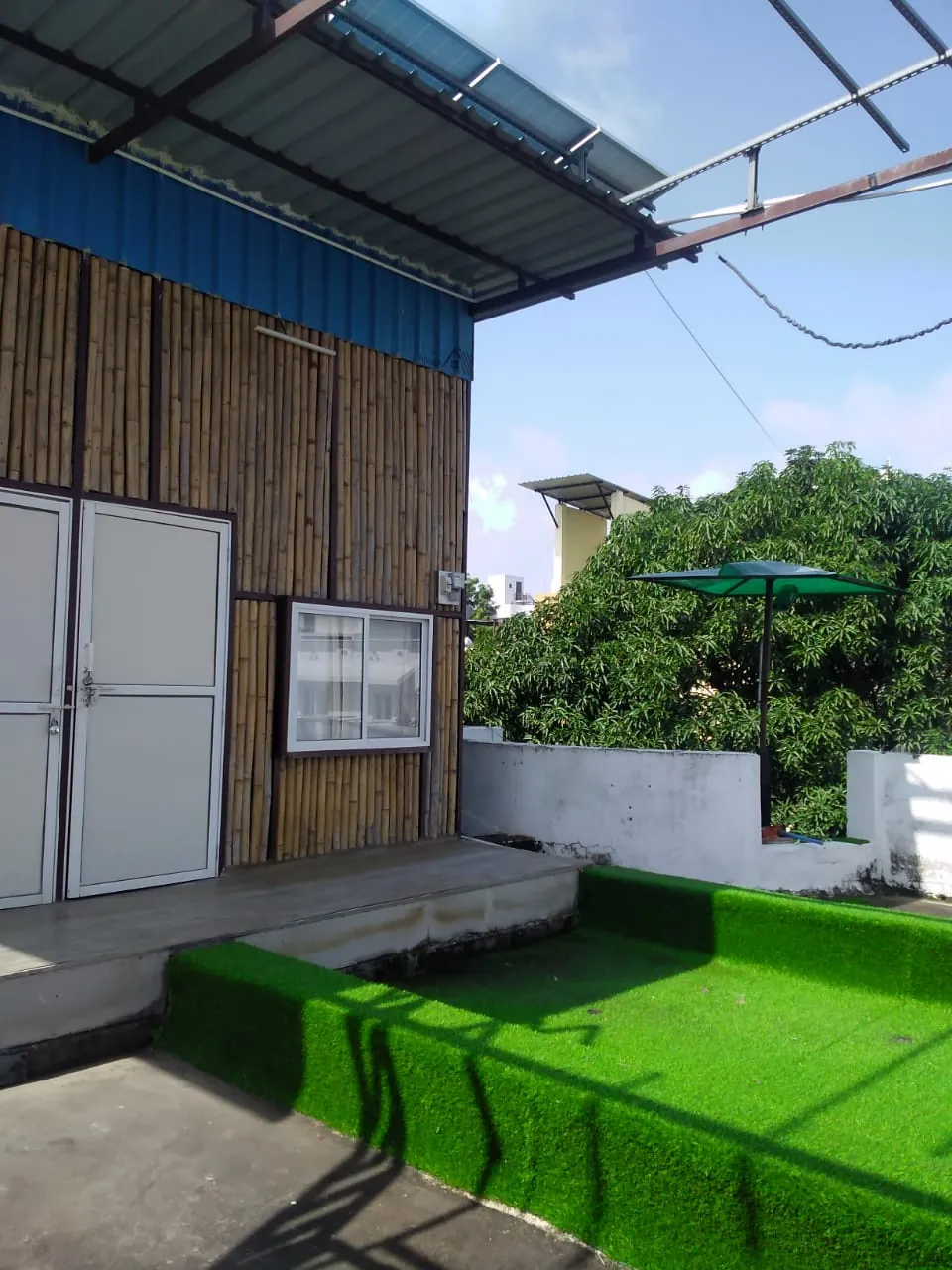
Bamboo has been used in India for centuries. Today its strength, beauty and sustainability make it well suited to ancillary units such as gazebos, sit-outs and solar huts. In this article we look at bamboo in India, its environmental benefits, and how ENP combines bamboo construction with solar panels.
Bamboo in India
India has a rich abundance of bamboo, with more than 130 species found across the country. Its rapid growth, strength and versatility make it an ideal material for functional and attractive ancillary units.
Environmental benefits of bamboo
- Renewable. Bamboo is one of the fastest-growing plants on earth and can mature within three to five years, far faster than timber.
- Carbon capture. Bamboo absorbs large amounts of carbon dioxide as it grows, helping to offset greenhouse gas emissions.
- Soil conservation. Its dense root system binds the soil and helps prevent erosion.
- Biodiversity. Bamboo groves provide habitat and food for birds, small mammals and other species.
- Low impact. Bamboo needs little water, can grow without chemical fertilisers or pesticides, and thrives on marginal land.
Bamboo units with integrated solar power
ENP designs bamboo solar huts, gazebos and sit-outs that combine aesthetics with function. Solar panels integrated into the structure power lighting and fans and charge devices, so the unit is both a pleasant space and a small source of clean energy.
Why it matters in India
- Rural livelihoods. Bamboo cultivation and craft create employment in rural areas where bamboo is abundant.
- Resilient construction. Bamboo’s flexibility and strength suit outdoor structures exposed to the weather.
- Cultural value. Bamboo has long been part of traditional Indian construction, and using it in contemporary design keeps that heritage alive.
In summary
With its strength, sustainability and beauty, bamboo is an excellent material for ancillary units. Combined with solar power, it offers a greener way to build and to live.